

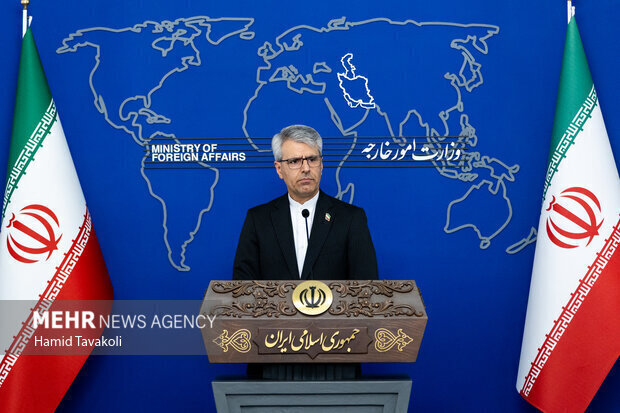
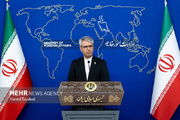
He made the comments in a recent interview with Lebanese Al-Mayadeen News Network published on Monday.
The spokesman said that Iran continues to cooperate with the International Atomic Energy Agency (IAEA), saying inspectors from the agency had visited the country’s only nuclear power plant in Bushehr nearly 10 days ago.
He said inspections of other Iranian nuclear facilities, particularly those attacked by the US and the Israeli regime during the two wars of aggression, were not possible because the IAEA had no clear arrangements or protocols for visiting such facilities.
Baghaei said inspections of those nuclear sites also lacked any justification at a time when the US was constantly threatening to attack Iran’s nuclear facilities.
The Foreign Ministry spokesman also censured Washington for repeatedly changing its position during negotiations aimed at reaching a permanent deal with Tehran.
He said Iran had clearly communicated its negotiating positions through messages conveyed to mediators, adding that indirect communication between Tehran and Washington was continuing through meetings and phone calls with mediators.
Baghaei said Iran had shortened the timeframe it had proposed for reopening the Strait of Hormuz in the Persian Gulf from an initial seven days to two days to demonstrate its seriousness and goodwill.
He said, however, that there was a clear sense of indecision and ambiguity in Washington, where US officials were making contradictory demands for reaching a deal with Iran.
Iran has announced seven main conditions for opening the Strait of Hormuz and ending the war, including an end to hostilities on all fronts, lifting of the US blockade and sanctions, and releasing frozen Iranian assets.
The joint US-Israeli aggression ended with a ceasefire in mid-April, although the two sides have exchanged fire in the Persian Gulf since then.
Iran has also refused to reopen Hormuz, a key waterway through which around a fifth of global oil supplies passed before the war, because of US violations of a Pakistan-mediated tentative agreement.
MNA










Your Comment